Freddie Mac put the average 30-year fixed rate at 6.65% for the week of August 20, 2026, keeping Albuquerque mortgage rates right around where they’ve held for most of this year. That kind of stability is actually useful: it gives buyers a real number to plan around instead of guessing at a moving target, and it’s a big part of why the local market has stayed steady rather than swinging wildly in either direction. Prices are still climbing at a healthy pace, and homes are taking a little more time to reach the closing table than they did a year or two ago. Here’s what today’s rate actually costs you every month, and how it’s shaping Albuquerque’s numbers this summer.
Where Albuquerque Mortgage Rates Stand Right Now
The 30-year fixed rate has moved in a fairly narrow band for most of 2026. It briefly dipped to 5.98% earlier in the year, its first reading under 6% in more than three years, but that low didn’t hold, and rates climbed back into the mid-6% range within weeks. As of late August, the 30-year average is 6.65%, essentially flat compared with a year ago, when it was 6.58%.
Forecasts for the rest of 2026 mostly agree on one thing: don’t expect a big drop. Fannie Mae’s August outlook actually revised its rate forecast upward, to roughly 6.7% for the third quarter and 6.8% for the fourth, citing persistent inflation and elevated oil prices. The Mortgage Bankers Association expects rates to hold in a similar range through year-end. Both groups agree the bigger relief, if it comes, is more likely in 2027 than this year.
What Rising Rates Mean for the Albuquerque Housing Market
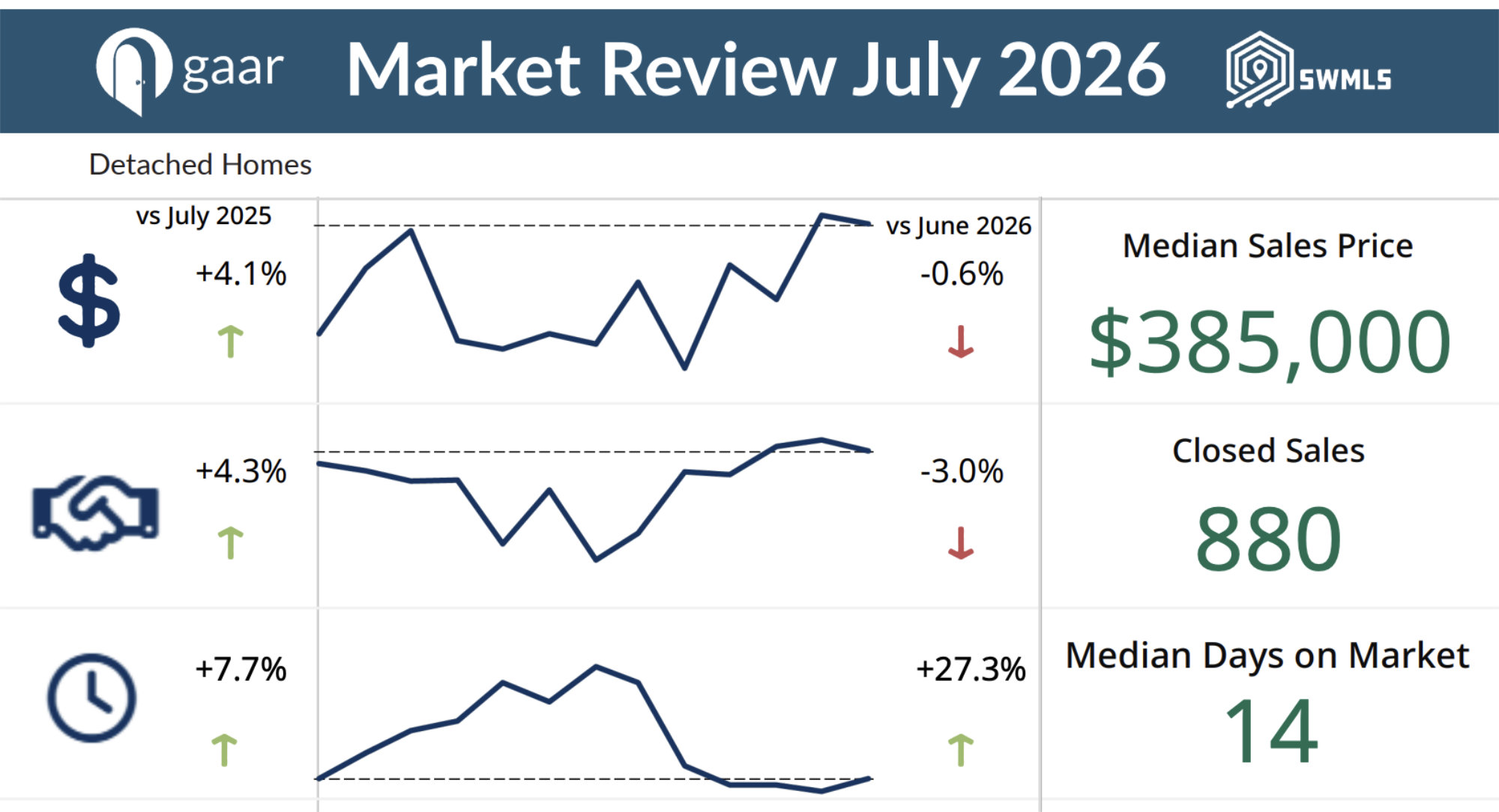
GAAR’s official Q2 2026 report put the detached-home median sale price at $380,000, up 3.5% year over year, even as new listings fell 5.8%. The July report showed the median climbing further to $386,000, a 4.3% year-over-year gain, while the median time to reach contract rose to 24 days and the pending contract fallout rate hit 17.7%.
That combination, prices rising while deals take longer to close and more of them fall apart, is a textbook sign of a rate-constrained market. Buyers who can afford today’s payments are still competing for a limited number of homes, which keeps prices rising. But the pool of buyers who can qualify at 6.65% is smaller than it would be at 5% or 6%, which is exactly why homes are sitting a little longer and why more contracts are unraveling over financing, appraisal, or cold feet.
Buyers: What Today’s Rate Actually Costs You
On a $380,000 Albuquerque home with 20% down, the loan amount comes to $304,000. At 6.65%, the principal-and-interest payment runs about $1,952 a month. At 6%, the same loan would cost about $1,823 a month, a difference of roughly $130. That gap adds up over a 30-year term, but it’s also smaller than many buyers assume, which is part of why waiting for a specific rate rarely pays off the way people expect.
Run some numbers now with our Mortgage Calculator.
Sellers: What a Smaller Buyer Pool Means for Your Listing
Higher rates don’t stop demand; they filter it. Fewer buyers qualify for the same purchase price at 6.65% than would at 6%, so the buyers who are still shopping tend to be more price-sensitive and more likely to ask for help with closing costs or a rate buydown. Pricing realistically from day one, rather than testing the top of the range, matters more in this kind of market than it did when rates were near 3%.
Why Rates Aren’t Falling Faster
Mortgage rates track the 10-year Treasury yield more closely than the Fed’s short-term rate decisions, and a few forces have kept that yield elevated through 2026. Inflation has stayed stickier than expected, oil prices have climbed due to ongoing conflict in the Middle East, and the labor market has held up well enough that there’s little pressure on the Fed to cut aggressively. Until one or more of those factors shifts meaningfully, most forecasters expect rates to stay range-bound rather than fall sharply.
Strategies Albuquerque Buyers Are Using Right Now
None of these change where Albuquerque mortgage rates sit today, but each one changes how much of that rate you actually feel every month.
Seller-funded rate buydowns: a concession from the seller can temporarily or permanently lower your rate; see our guide on how seller concessions work locally for the loan-type limits
-
Adjustable-rate mortgages: an ARM with a lower initial rate can make sense for buyers who expect to move or refinance within five to seven years
Extra principal payments: even small additional payments early in the loan term reduce total interest more than most buyers expect
-
Locking your rate early: a rate lock protects you from increases while you’re under contract, which matters in a market this range-bound
What Investors Are Watching
For Albuquerque investors, the math is a little different than for owner-occupants. Higher rates compress cash-on-cash returns on financed purchases, which is why more investors are running the numbers on assumable loans, seller financing, and all-cash offers where the numbers allow. Rental demand has also stayed strong as rate-locked homeowners hold onto their current mortgages instead of selling, a dynamic that continues to support rents across the metro even as home prices grow only modestly.
The Bottom Line on Albuquerque Mortgage Rates
Rates in the mid-6% range appear to be the new normal for the rest of 2026. Waiting for a dramatically lower number is unlikely to pay off before 2027 at the earliest, and the data above shows why: buyers who find the right home at a payment they can manage today have more leverage to negotiate terms, closing help, or a rate buydown than headlines might suggest. Sellers who price to today’s buyer pool, rather than last year’s market, are still closing deals.
Curious what today’s Albuquerque mortgage rates mean for your specific budget, or how much room you have to negotiate on your next offer? That’s exactly the kind of question local numbers answer better than national headlines.
Ready to run your numbers? Contact Better with Baron to get started!