Inheriting a home is one of those situations nobody really plans for. One day you’re dealing with the loss of a loved one, and the next you’re fielding questions about property taxes, probate court, and whether the roof needs replacing before you can list. We know that selling an inherited home in Albuquerque can be a lot to maintain.
This guide walks you through what actually happens when you sell an inherited home in Albuquerque, from the legal steps that come first to the market conditions that affect your bottom line.
Step 1: Understand Who Has the Legal Authority to Sell
Before anything else, you need to know whether the property has to go through probate and who has the authority to make decisions about it.
In New Mexico, if the estate is valued at more than $50,000 and there is no trust or beneficiary deed in place, the property will likely need to go through probate. That process is handled by the Bernalillo County Probate Court (or the district court for more complex estates), and it involves appointing a personal representative to manage the estate.
Common ways inherited property transfers in New Mexico:
- Through a will: A personal representative is appointed by the court. They have legal authority to sign on behalf of the estate once probate is open.
- Through a revocable living trust: The successor trustee steps in and typically has authority to sell without going through probate at all.
- Through a beneficiary deed: Ownership transfers directly to the named beneficiary upon death, bypassing probate entirely.
- Without a will (intestate): New Mexico’s intestacy laws determine who inherits. This route often takes longer and can get complicated if multiple heirs are involved.
If you’re not sure which situation applies, an estate attorney familiar with New Mexico law is the right first call. Trying to list a property before authority is established will stall the sale.
Step 2: Know the Probate Timeline
Probate in New Mexico typically takes 6 to 12 months for straightforward estates, though complex cases (especially those involving out-of-state heirs, disputed wills, or outstanding debts) can stretch to two years or more.
During probate, the estate covers the cost of maintaining the property. That means mortgage payments, utilities, property taxes, and insurance continue to come out of the estate, which is one reason many families want to move quickly once the process is complete.
The good news: once probate closes and authority is established, the actual sale process works the same as any other home sale in Albuquerque.

Step 3: Understand the Tax Picture Before You Price
This is the piece most people don’t know going in, and it can significantly affect your net proceeds.
The Step-Up in Basis Rule
When you inherit a property, the IRS resets your tax basis to the fair market value of the home on the date of the original owner’s death, not what they paid for it decades ago. This is called the step-up in basis.
Here’s why that matters: if your parent bought a home in Albuquerque in 1995 for $120,000, and it was worth $380,000 when they passed, your basis is now $380,000. If you sell it for $400,000, you only owe capital gains tax on $20,000, not the full $280,000 of appreciation that happened during their lifetime.
New Mexico is also a community property state. When one spouse passes, the entire community property interest (including the surviving spouse’s share) may receive a full step-up in basis, which can reduce or eliminate capital gains tax exposure entirely.
New Mexico has no inheritance tax or estate tax
You will not owe state-level inheritance tax on a property you receive in New Mexico. However, you may owe federal capital gains tax on any appreciation that occurs after you inherit, and New Mexico’s personal income tax may apply to that gain depending on your situation.
Before you price the home or accept an offer, talk to a CPA or tax advisor. The step-up in basis is straightforward in most cases, but community property rules and multi-heir situations can add complexity.
Step 4: Assess the Property’s Condition Honestly
Many inherited homes in Albuquerque were owned for 20, 30, or 40 years. That often means deferred maintenance, outdated systems, and cosmetic issues that need to be addressed, or at least disclosed.
New Mexico requires sellers to disclose known material defects. Even in an estate sale, the personal representative is expected to disclose what is known about the property’s condition. Getting a pre-listing home inspection is one of the smartest moves you can make it tells you exactly where the property stands before buyers start making offers.
For a detailed look at what inspectors focus on in Albuquerque homes, take a look at this guide: Home Inspection in Albuquerque: What to Expect.
Sell as-is or make repairs?
There’s no universal answer. In the current Albuquerque market, homes in good condition in desirable neighborhoods still move. Homes with significant deferred maintenance often attract investors or cash buyers looking for a discount. Both paths can work it depends on the property, your timeline, and how much capital you want to put in upfront.
An experienced local agent can walk through the property with you and help you weigh the numbers before you decide.
Step 5: Price It Based on Current Market Data
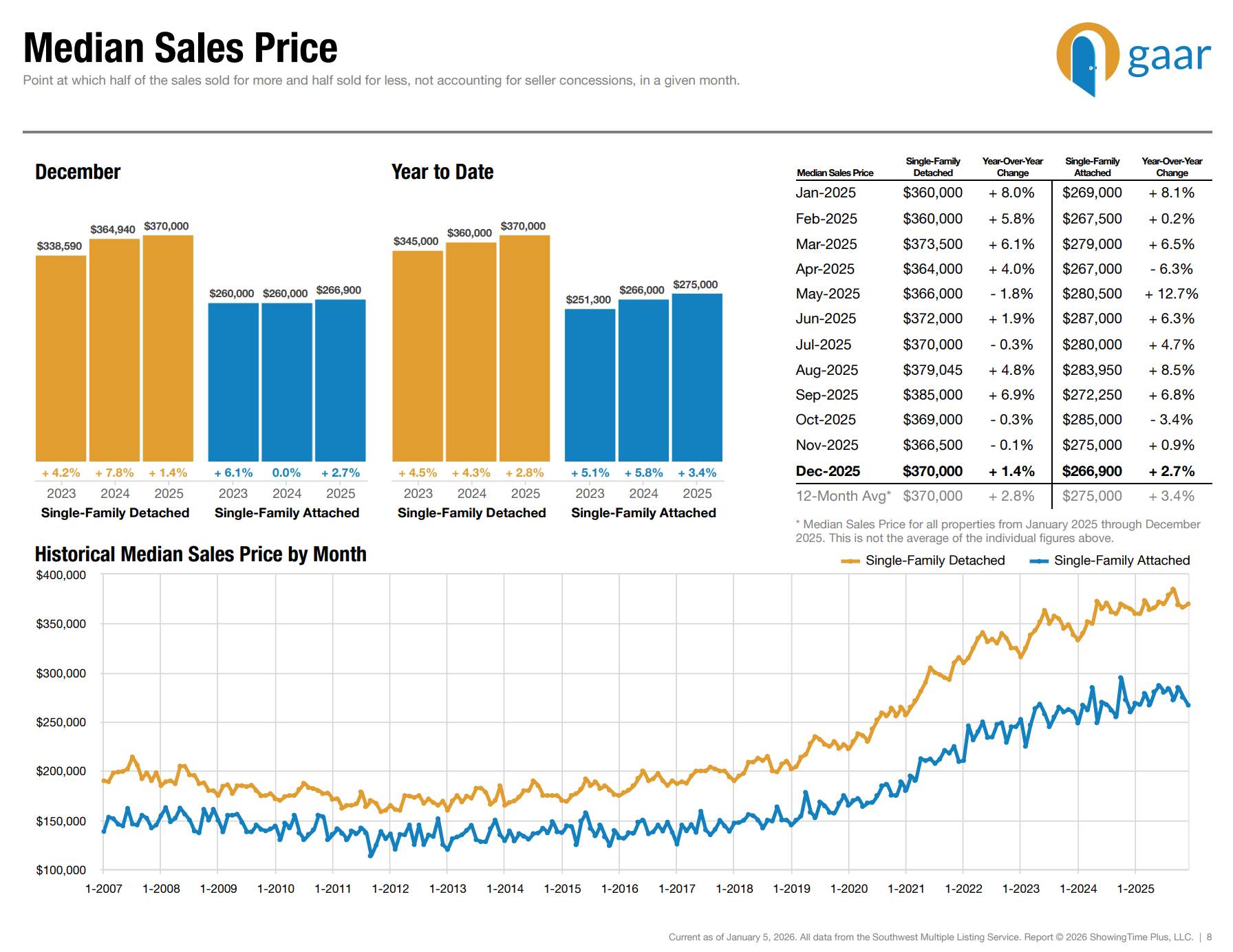
Albuquerque’s housing market has held relatively steady heading into 2026. According to GAAR’s 2025 Annual Market Report, here’s where things stand:
- Single-family home inventory closed 2025 at 11,706, a 7% drop from 2024, keeping supply tight
- Average sale price for single-family detached homes was around $446,900 in mid-2025, with the trailing twelve-month average near $420,000
- Days on market sat around 60 days by late 2025, slightly longer than prior years, but not a slow market
- Sellers who price accurately are still moving properties; sellers who overprice are seeing reductions
Pricing an inherited home carries an emotional layer that a standard sale doesn’t. The goal is to arrive at a number based on recent comparable sales, not what you believe the home should be worth, and not what it would have sold for five years ago.
For the full market breakdown, see Albuquerque Housing Market: April 2026 Numbers Explained.
Step 6: Decide How to Sell
Once the property is legally cleared and you have a realistic sense of condition and value, you have a few options.
List with a local agent
This is the most common path and typically produces the highest net proceeds. A local agent markets the home through SWMLS, manages showings and negotiations, and guides you through closing. For inherited properties, working with an agent who understands estate sales is worth the extra vetting. There are additional documents and timelines involved that not every agent handles regularly.
Sell to a cash buyer or investor
If the home needs significant work, if heirs are split across multiple states, or if speed matters more than top dollar, a cash sale can simplify the process. You skip repairs, staging, and extended marketing periods. The tradeoff is usually a lower sale price, often 10% to 20% below market.
If you’re weighing keeping the property as a rental instead, it’s worth understanding the Albuquerque investment landscape first. Albuquerque Real Estate Investing: Which Strategy Fits You? breaks down the numbers.
What About Multiple Heirs?
When more than one person inherits the property, all heirs must agree before the home can be sold. Disagreements over timing, pricing, or repairs are one of the most common reasons inherited home sales get delayed or end up in court.
The practical fix: get everyone on the same page early. Have a direct conversation about goals, timelines, and financial expectations before any offers come in. If heirs are not in agreement, a probate attorney can help structure a resolution.

Closing Costs on an Inherited Home Sale
Budget for closing costs of roughly 8% to 10% of the sale price. That includes agent commissions, title fees, and any outstanding liens or property taxes that need to be satisfied before the sale can close. Any debts attached to the estate, including an existing mortgage, must be paid from sale proceeds before heirs receive distributions.
The Bottom Line
Selling an inherited home in Albuquerque involves more moving parts than a typical sale. The good news: it’s manageable when you take it step by step. Get the legal authority established first, understand your tax position before you price, assess the condition honestly, and then bring in a local agent who knows how to navigate estate sales in this market.
The Albuquerque market is active, and buyers are out there. With the right preparation, most inherited homes sell without the drawn-out timelines people expect.
Ready to take the next step? Contact us and let’s get started!